Office Address:
Gala No. 48, Shiva Industrial Estate,
Lake Road, Near TATA Power House,
Bhandup (West),
Mumbai – 400078, India
Factory Address:
C-8/ 10, Bhumi Industrial Park,
Mumbai-Nasik Highway,
Village: Pimplas, Bhiwandi,
Thane – 421311, India
Office Address:
Gala No. 48, Shiva Industrial Estate,
Lake Road, Near TATA Power House,
Bhandup (West),
Mumbai – 400078, India
Factory Address:
C-8/ 10, Bhumi Industrial Park,
Mumbai-Nasik Highway,
Village: Pimplas, Bhiwandi,
Thane – 421311, India
 ByAdmin
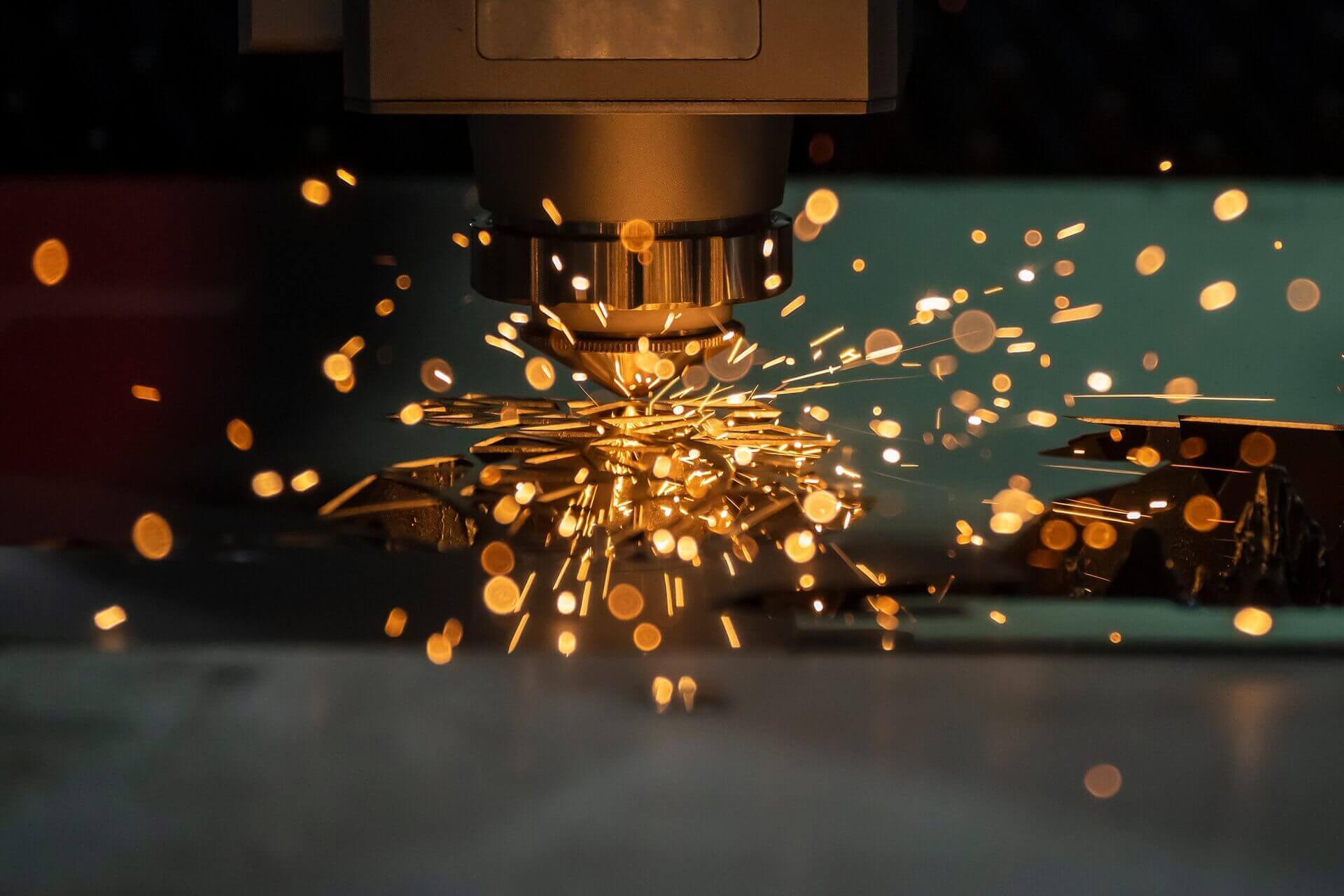
Industrial laser cutting is a manufacturing process used to cut metal sheets and plates into specific shapes and sizes using a focused laser beam.
In simple terms, a laser is used to cut the metal instead of using a conventional cutting tool. The cutting path is controlled by a CNC system, which allows the same design to be produced repeatedly with a high level of consistency.
For industries where components need to be made accurately and then used in further manufacturing processes, industrial laser cutting has become an important part of the production process.
The process starts with a digital drawing or CAD file of the required component.
This drawing is converted into a machine-readable cutting program. The laser then follows the programmed profile and cuts the metal sheet or plate according to the required shape.
During the process, the laser generates a very concentrated amount of heat at the cutting point. This melts or vaporises the material along the cutting path, while an assist gas helps remove the molten material from the cut.
The result is a precisely cut metal component that can then move to the next manufacturing operation.
Depending on the component, that next operation could be CNC bending, rolling, welding, grinding, painting or powder coating.
So laser cutting is often not the final step. It is one part of a larger manufacturing process.
For industrial manufacturing, the requirement is usually not just to cut a piece of metal.
The component may need to fit into a larger assembly, match a drawing, be produced repeatedly and then go through additional fabrication processes.
This is where industrial laser cutting services can be useful.
Some of the common advantages include:
The exact result depends on the material, thickness, machine configuration, cutting parameters and the design of the component.
Yes, fiber laser technology can be used for cutting relatively thick metal plates, although the maximum thickness depends on the material and the machine being used.
At Lasercraft Engineers LLP, our fiber laser cutting capability includes:
This makes thick plate laser cutting useful for applications where components need to be made from heavier sections of metal rather than thin sheet alone.
For example, a heavy industrial component may start as a thick steel plate. The plate is laser cut to the required profile and can then be bent, welded, ground and finished depending on the final requirement.
One thing that is sometimes overlooked when discussing laser cutting is what happens after the cutting is completed.
In actual manufacturing, a laser-cut component may be only the first stage.
A typical component could go through a process such as:
Laser Cutting → Bending → Welding → Grinding → Painting / Powder Coating
This is particularly relevant for companies looking for custom metal components rather than simply purchasing cut sheets.
For OEMs and industrial equipment manufacturers, having these processes coordinated can make the manufacturing process simpler and reduce the need to manage multiple suppliers for different stages of the same component.
Industrial laser cutting is used across many manufacturing sectors.
Some common applications include:
Components used in forklifts, material handling equipment and related machinery can require accurately cut plates and fabricated assemblies.
These components may involve thick materials and can require additional bending, welding and finishing after laser cutting.
Machine manufacturers often require custom profiles, brackets, plates, covers, frames and other fabricated components.
Laser cutting allows these profiles to be produced directly from CAD drawings and then sent for further fabrication.
Engineering companies may require both one-off components and repeat production parts.
Laser cutting for industrial equipment can be used where the component design contains complex profiles or requires consistent dimensions across multiple parts.
Laser-cut components are also used in various automotive, electrical, electronics and general engineering applications.
The exact manufacturing process depends on the component design, material and required finish.
For an OEM, the requirement is usually more than just cutting metal.
A component may need to be manufactured according to a drawing, produced in a particular material and thickness, and then supplied in a finished or semi-finished condition.
This is why laser cutting for OEMs is often combined with other fabrication processes.
A supplier that can handle cutting along with bending, welding and finishing can support more of the manufacturing requirement under one roof.
At Lasercraft Engineers LLP, our manufacturing capabilities include CNC laser cutting, CNC bending, rolling, TIG/MIG/MAG welding, grinding and finishing, and powder coating.
The material used depends on the application and component requirements.
Common industrial metals processed through laser cutting include:
The suitable cutting process and parameters can vary significantly between materials and thicknesses.
For production work, it is therefore important to provide the material grade, thickness and component drawing when requesting a quotation.
If you are looking for industrial laser cutting services, the machine’s power is only one part of the decision.
It is also worth looking at:
For OEM and industrial manufacturing requirements, the ability to take a component from a drawing through cutting and fabrication can be just as important as the laser itself.
Lasercraft Engineers LLP provides industrial laser cutting and metal fabrication services for manufacturing and engineering requirements.
Our 12 kW fiber laser cutting machine can process:
Mild Steel up to 40 mm | Stainless Steel up to 30 mm | Aluminium up to 20 mm
Depending on the component requirement, laser cutting can be combined with CNC bending, rolling, welding, grinding, painting and powder coating.
If you have a component drawing or production requirement, you can share the drawing and material details with our team for evaluation and quotation.
Looking for industrial laser cutting services? Contact Lasercraft Engineers LLP to discuss your component requirement.
Industrial laser cutting is a CNC-controlled process used to cut metal sheets and plates into required shapes and profiles using a focused laser beam.
The maximum thickness depends on the material, laser power and machine configuration. Lasercraft’s current capability is up to 40 mm for mild steel, 30 mm for stainless steel and 20 mm for aluminium.
Yes. Laser cutting can be used to manufacture profiles and components for OEMs, particularly when the parts need to be produced repeatedly from engineering drawings.
Yes. Laser-cut components can be sent for further processes such as CNC bending, rolling and welding depending on the component design.
Typically, the component drawing, material grade, material thickness, quantity and any required finishing or fabrication operations are useful for preparing a quotation.
If you have a component drawing or requirement that needs laser cutting, bending, welding or finishing, you can share the details with our team. We can review the requirement and help determine the suitable manufacturing process.
Contact Lasercraft Engineers LLP for industrial laser cutting and metal fabrication requirements.